 STOIKOFF
installations
chandelier
If a future society were to examine the ruins of our own, it would hardly doubt that video surveillance devices occupied a central place in everyday life. Cameras have colonized not only public space but also the private sphere: they watch streets, buildings, entrances, gardens, garages, and interiors. Their presence has become so commonplace that we barely notice them anymore. We know we are constantly being recorded, yet we rarely ask who is watching, for what purpose, or what becomes of those images. Surveillance has become so deeply embedded in daily life that it has turned almost invisible.
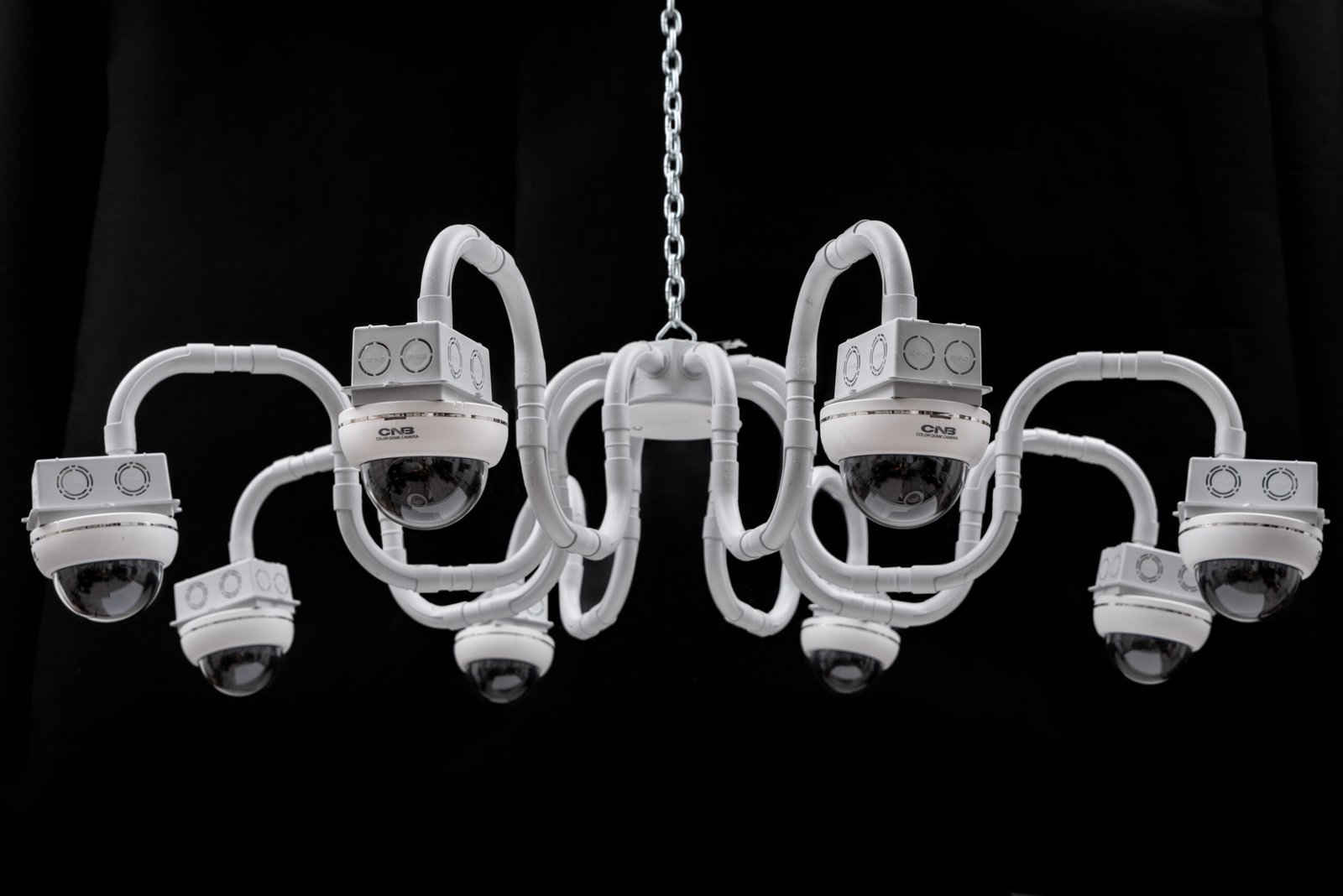
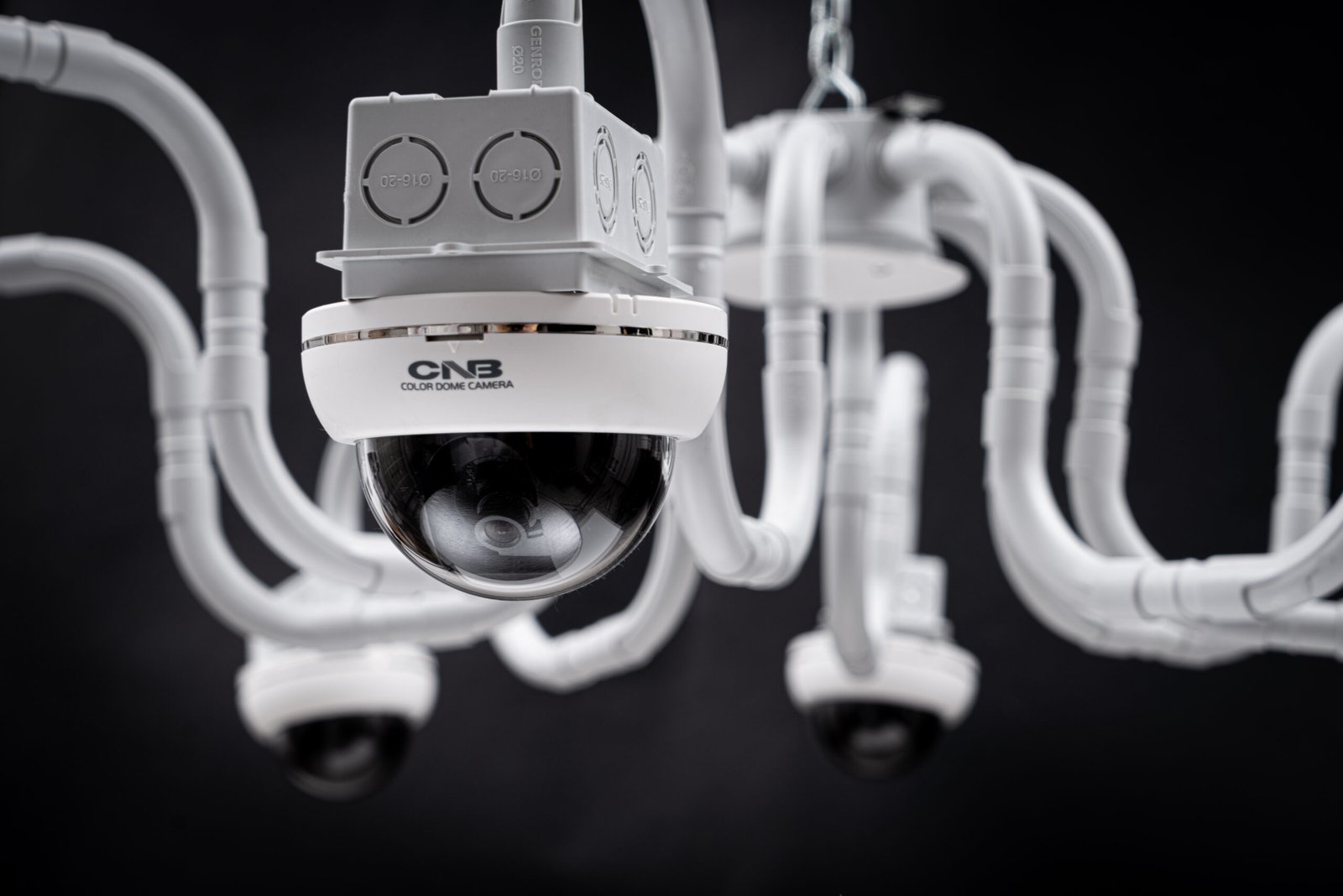
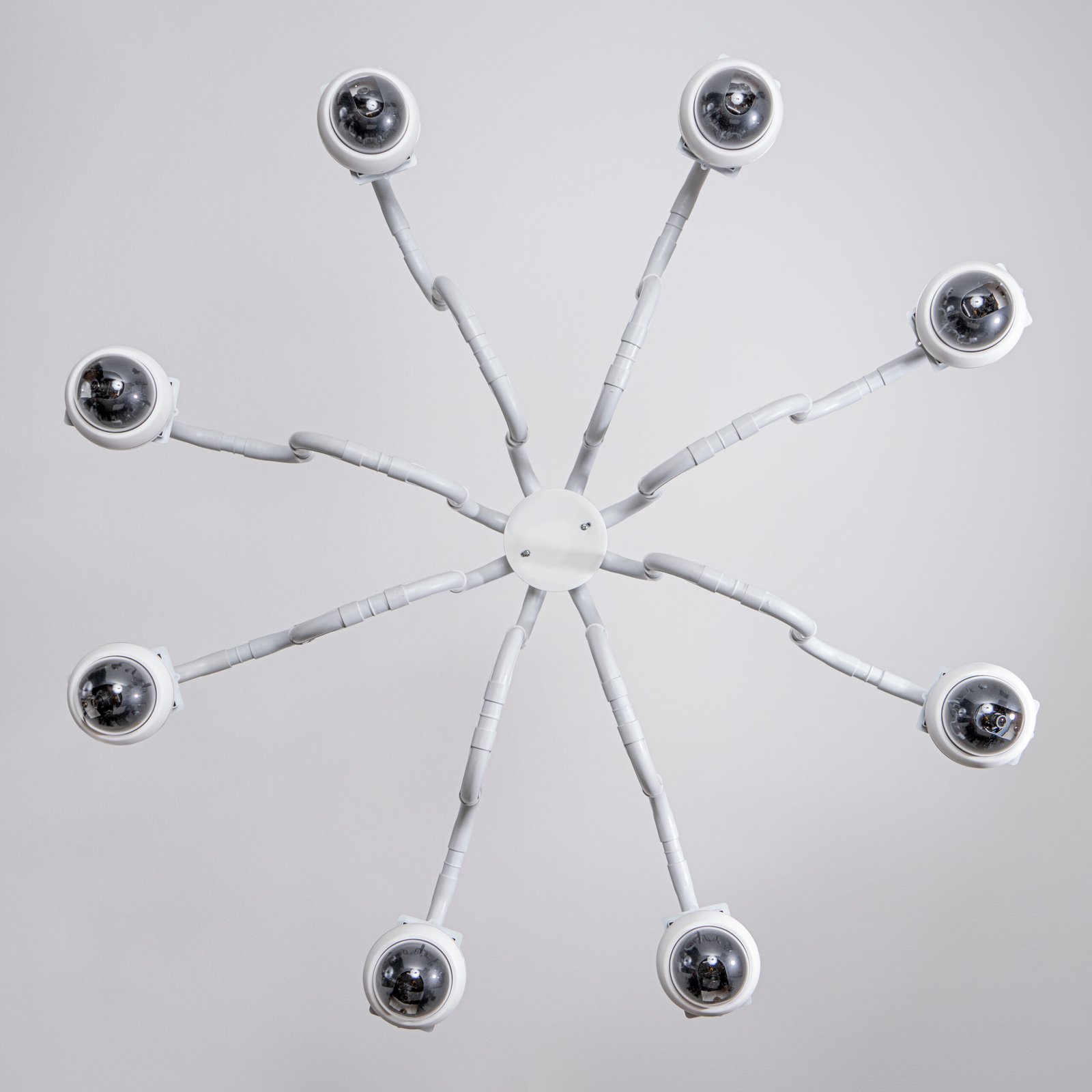
Araña (chandelier) is part of the series Archaeology of the Vigilocene, an ongoing artistic investigation into the normalization of surveillance technologies and the ways they shape our perception of space and of ourselves. The work adopts the form of a chandelier—a domestic object historically associated with ornament, power, and representation—and replaces its light sources with surveillance cameras, shifting the visual language of security into the realm of decoration.
Yet the cameras in Araña are entirely disconnected: they do not record, store, or transmit images. Their surveillance capacity is purely symbolic. They do not need to function in order to produce the effect on which they rely. As in the panopticon, the mere possibility of being watched is enough to influence behavior. At the same time, the work introduces a further tension: while panopticism presupposes the constant awareness of surveillance, our everyday coexistence with these devices has produced the opposite effect. The cameras remain present—visible and ubiquitous—yet we have become so accustomed to them that we no longer truly see them.
- Year
- 2024
- Medium
- Sculpture – Object – Installation
- Materials
- PVC pipes, security cameras, steel chain
- Dimensions
- 80 × 100 × 100 cm, 4 kg